Shopify vs WooCommerce: Which One Is Right for Your Online Business?
If you are planning to start an online store, Shopify and WooCommerce are two of the most popular choices. Here is an honest, practical comparison to help you choose the right platform.
Iksen Team
Ecommerce & Web Architecture
Share:
If you are planning to start an online store, one of the first things you need to decide is which platform to use.
Two of the most popular choices are Shopify and WooCommerce. Both are good options, but they work in fundamentally different ways.
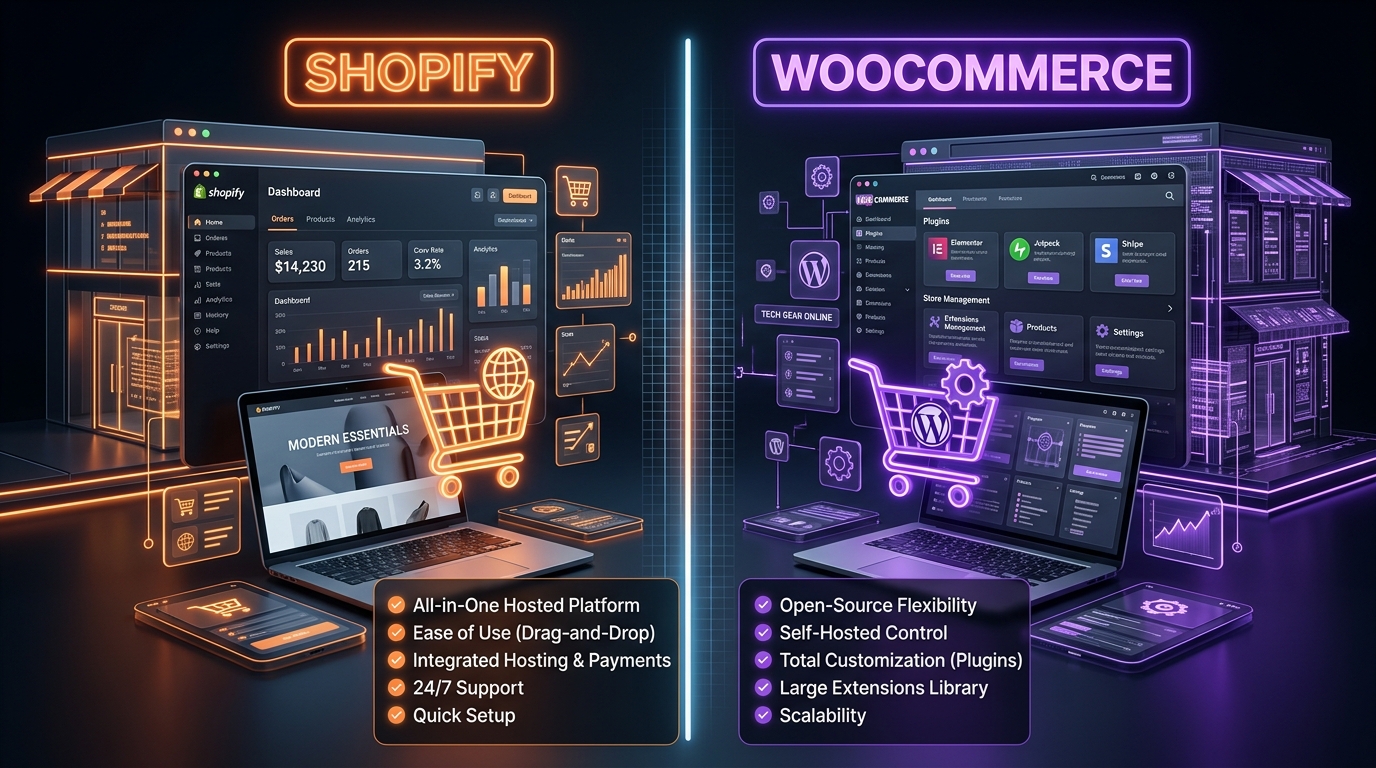
Shopify is easier to set up and manage. WooCommerce gives you more freedom and control. So which one should you choose? In this guide, we compare Shopify and WooCommerce in simple, practical terms so you can pick the best foundation for your business.
What Is Shopify?
Shopify is a fully hosted platform that helps you create and run an online store. It includes virtually everything you need in one subscription package:
Website hosting & SSL certification
Product catalog & inventory management
Order processing & fulfilment tracking
Integrated payment gateways
Responsive store themes
App store for extending functionality
Sales reports and analytics
💡The Bottom Line on Shopify
You do not need to worry much about the technical side of the website. Shopify handles server maintenance, upgrades, and security for you. This makes Shopify an ideal choice for entrepreneurs who want to start selling online without dealing with website-related headaches.
What Is WooCommerce?
WooCommerce is an open-source ecommerce plugin built on WordPress. If you already have a WordPress website, or want full ownership over your tech stack, you can add WooCommerce and start selling products.
Unlike Shopify, you manage the hosting environment and server configuration yourself. For example, you need to arrange:
Fast web hosting (e.g., Cloudways, Kinsta, WP Engine)
WordPress installation & configuration
Custom theme and layout design
Plugin selection and updates
Automated backups and staging environments
Security firewalls and SSL certificates
💡The Bottom Line on WooCommerce
WooCommerce gives you complete freedom and zero transaction fees on your own checkout, but it requires regular maintenance and technical support to run smoothly.
Shopify vs WooCommerce: Quick Comparison
Feature
Shopify
WooCommerce
Easy to Use
Very Easy (No-code)
Moderate (Learning curve)
Setup Time
Quick (Hours to days)
Takes more time
Hosting
Included in monthly fee
You arrange & pay separately
Customization
Good (Theme editor & apps)
Virtually unlimited (Open source)
Maintenance
Fully managed by Shopify
Self-managed (Updates & backups)
SEO Flexibility
Good (Built-in)
Exceptional (Yoast, RankMath, custom URLs)
Design Options
Curated ready-made themes
Thousands of themes & page builders
Technical Skills Needed
Low
Moderate to high
Apps / Plugins
Shopify App Store (8,000+)
WordPress Plugin Directory (60,000+)
Best For
Fast setup, turnkey management
Total control, custom checkout flows
1. Which One Is Easier to Use?
Shopify is easier for most people. You can create an account, select a theme, upload your product catalog, configure payment gateways, and start taking orders right away. Most of the backend infrastructure is abstracted away.
WooCommerce takes a little more work. You need a domain name, hosting package, WordPress installation, plugins, and some technical configuration. If something conflicts after a plugin update, you may need a developer's help.
Better Choice: Shopify. If you want something straightforward and easy to manage daily, Shopify is usually the smoother option.
2. Which One Costs Less?
This depends on how you build your store. Shopify has a fixed monthly subscription (Basic, Shopify, Advanced) plus credit card processing rates. You may also pay for premium apps and themes.
WooCommerce itself is free and open-source. However, you still have to pay for hosting, domain registration, premium plugins (like advanced subscriptions or shipping calculators), and periodic developer maintenance.
Better Choice: Depends on Your Needs. WooCommerce can be cheaper for a basic store, but an enterprise WooCommerce setup with high-tier hosting can equal or exceed Shopify costs. Always evaluate total cost of ownership (TCO) over 12 to 24 months.
3. Which One Gives You More Control?
WooCommerce gives you 100% control. You own the code, the database, and the hosting server. You can customize checkout flows, implement bespoke wholesale B2B pricing, create multi-vendor marketplaces, and modify any database query.
Shopify also allows significant customization through Liquid templates and Shopify Apps, but you still operate within Shopify's proprietary ecosystem (for example, checkout customization requires Shopify Plus on higher tiers).
Better Choice: WooCommerce for deep architectural flexibility.
4. Which One Is Easier to Maintain?
Shopify is virtually maintenance-free from a DevOps perspective. Shopify manages server uptime, auto-scaling on Black Friday traffic spikes, security patches, and payment compliance (PCI-DSS).
With WooCommerce, you are responsible for core WordPress updates, PHP version compatibility, plugin conflicts, database optimization, and caching layers.
Better Choice: Shopify for hands-off peace of mind.
5. Which One Is Better for Design?
Both platforms enable gorgeous, high-converting digital storefronts. Shopify provides responsive themes with intuitive drag-and-drop sections.
WooCommerce provides complete design freedom through tools like Elementor, Gutenberg, Bricks, or custom headless frontends (Next.js / React).
Better Choice: Shopify for quick, polished design; WooCommerce for pixel-perfect bespoke layouts.
6. Apps and Plugins Ecosystem
Shopify has an extensive App Store featuring thousands of curated apps for reviews, upsells, email marketing, and loyalty points.
WooCommerce taps into the global WordPress plugin ecosystem with over 60,000 plugins. You can find plugins for nearly any feature imaginable.
Caution: Installing too many plugins or apps on either platform can increase monthly expenses and slow down page load times. Curate strictly what your store needs.
7. Which One Is Better for SEO?
SEO determines how well your products and content rank on Google. Shopify provides solid built-in SEO tools (meta titles, alt tags, 301 redirects, auto-sitemaps), though URL structures are somewhat rigid (e.g., forced '/collections/' and '/products/' path prefixes).
WooCommerce offers unmatched SEO flexibility thanks to WordPress plugins like Rank Math and Yoast SEO. You have complete control over permalink structure, schema markup, and content marketing clusters.
Better Choice: WooCommerce, particularly if organic search and content marketing are key pillars of your acquisition strategy.
8. Which One Is Faster?
Shopify delivers consistently fast speeds via its global Content Delivery Network (CDN) and optimized cloud infrastructure.
WooCommerce can be blazing fast if paired with high-performance cloud hosting (Redis caching, LiteSpeed / Nginx, optimized image delivery). However, cheap shared hosting and bloated plugins can slow it down drastically.
9. Which One Is Safer?
Shopify provides Level 1 PCI-DSS compliant hosting, handles SSL certificates, and shields your store against DDoS attacks automatically.
WooCommerce gives you security control, but you must enforce strong passwords, use security plugins (like Wordfence), implement web application firewalls (Cloudflare), and keep extensions updated.
Better Choice: Shopify for simplicity and automatic compliance.
10. Payment Options and Gateways
Shopify features Shopify Payments (powered by Stripe) with zero transaction fees on internal gateways, plus hundreds of third-party payment gateways (though third-party gateways may incur extra transaction fees on lower plans).
WooCommerce supports Stripe, PayPal, Square, Razorpay, Authorize.net, cryptocurrency, and local payment processors with zero platform-imposed transaction surcharge.
11. Scalability as Your Business Grows
Both platforms scale to millions of dollars in annual sales. Shopify powers massive enterprise brands (like Gymshark, Heinz, Staples) through Shopify Plus.
WooCommerce powers high-volume enterprises when coupled with scalable cloud infrastructure (AWS, Google Cloud, enterprise dedicated clusters).
Summary: When Should You Choose Which?
Choose Shopify if: You want to launch quickly, prefer minimal technical maintenance, want an intuitive dashboard, and want to focus all your energy on marketing and product sales.
Choose WooCommerce if: You already use WordPress, need complex custom functionality, require complete ownership of your customer data and code, or want deeply integrated content marketing.
Partner With Iksen
Looking to Implement Automation or Launch a Custom Storefront?
Our team of experienced AI architects and full-stack developers can help you design and deploy scalable, reliable digital solutions.
Yes. Shopify is generally much easier because website hosting, security, server updates, and basic storefront infrastructure are fully handled for you.
Running a business means dealing with countless repetitive tasks every day. AI automation tools can handle the manual work automatically so you can focus on real growth.
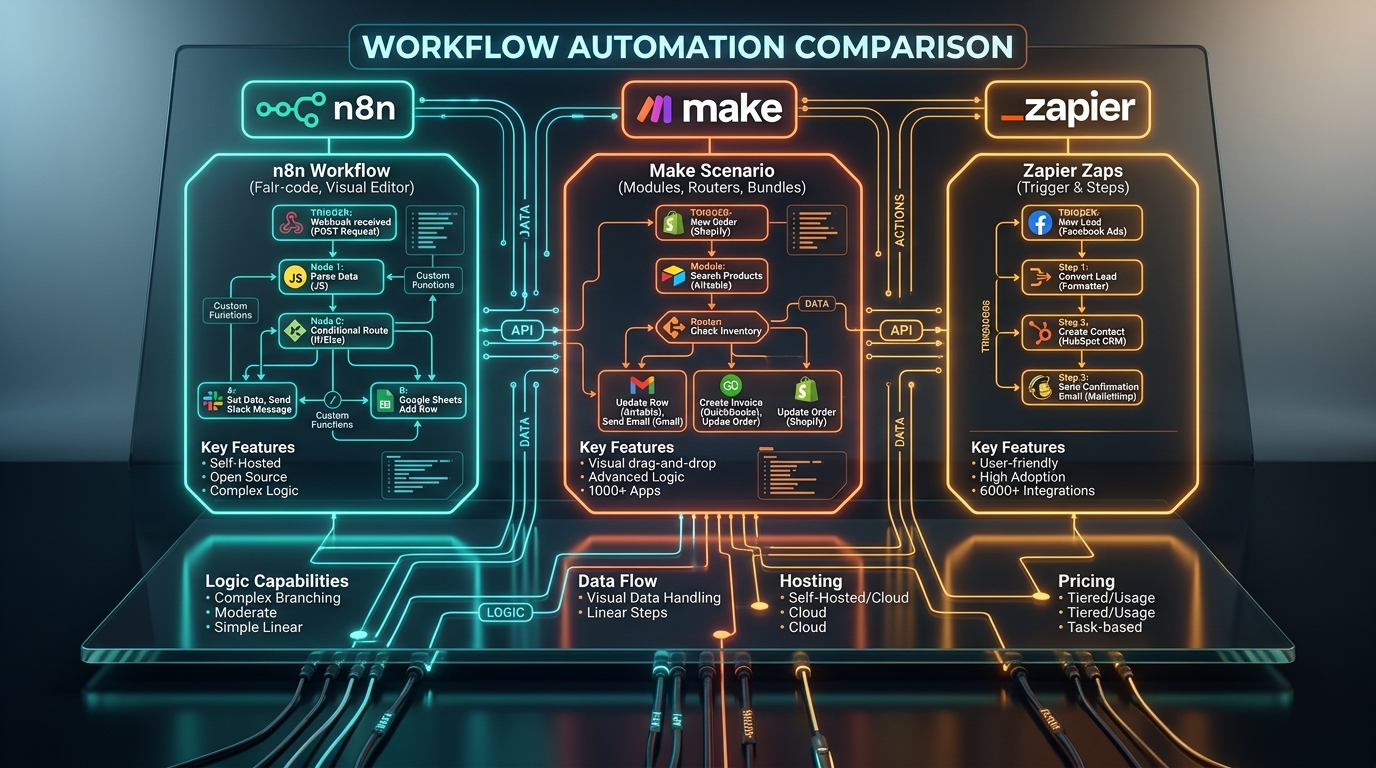
Deciding between n8n, Make, and Zapier? We break down their core differences in pricing, visual interface, complexity, and AI capabilities so you can make the right investment.
Scaling an online store requires a high-performing tech stack. Here are the essential SaaS tools top ecommerce brands rely on for marketing, fulfillment, support, and analytics.